Table of Contents
18/3/1810: Valverde
Introduction
Duc D'Aremberg's 27th Chasseurs a Cheval are part of a French scouting cavalry force moving west from Seville towards Niebla and ultimately Huelva looking to secure control of the countryside and looking for Spanish patriot forces. Moving from Niebla north to Valverde the Chasseurs encounter the guerilla force operating on the western side of the sierra led by Jefe Bolanos.
Contact Decision
French
The decision that best serves the interests of the French is to act aggressively and seek to attack and destroy the guerilla force.
Alternatively, if the French act less decisively they will simply observe the guerilla thereby allowing them time to withdraw.
Spanish
The best decision for the Spanish commander is, having observed the French, to withdraw without seeking combat and report this intelligence to the Spanish high command.
The alternative is to contest the territory seeking to push the French back towards Niebla.
Outcome
This is primarily a command and experience test using the Berthier personality test function. Jefe Bolanos fails on both counts and as a result is determined to test his irregular force against the Belgian cavalry. However d'Aremberg is young and hasn't been to war with his regiment before, and this makes him hesitant. He fails both tests and seeks to simply observe the Spanish patriots.
The outcome is that as d'Aremberg disperses his men to observe the Spanish, they attack one of his pickets.
Map
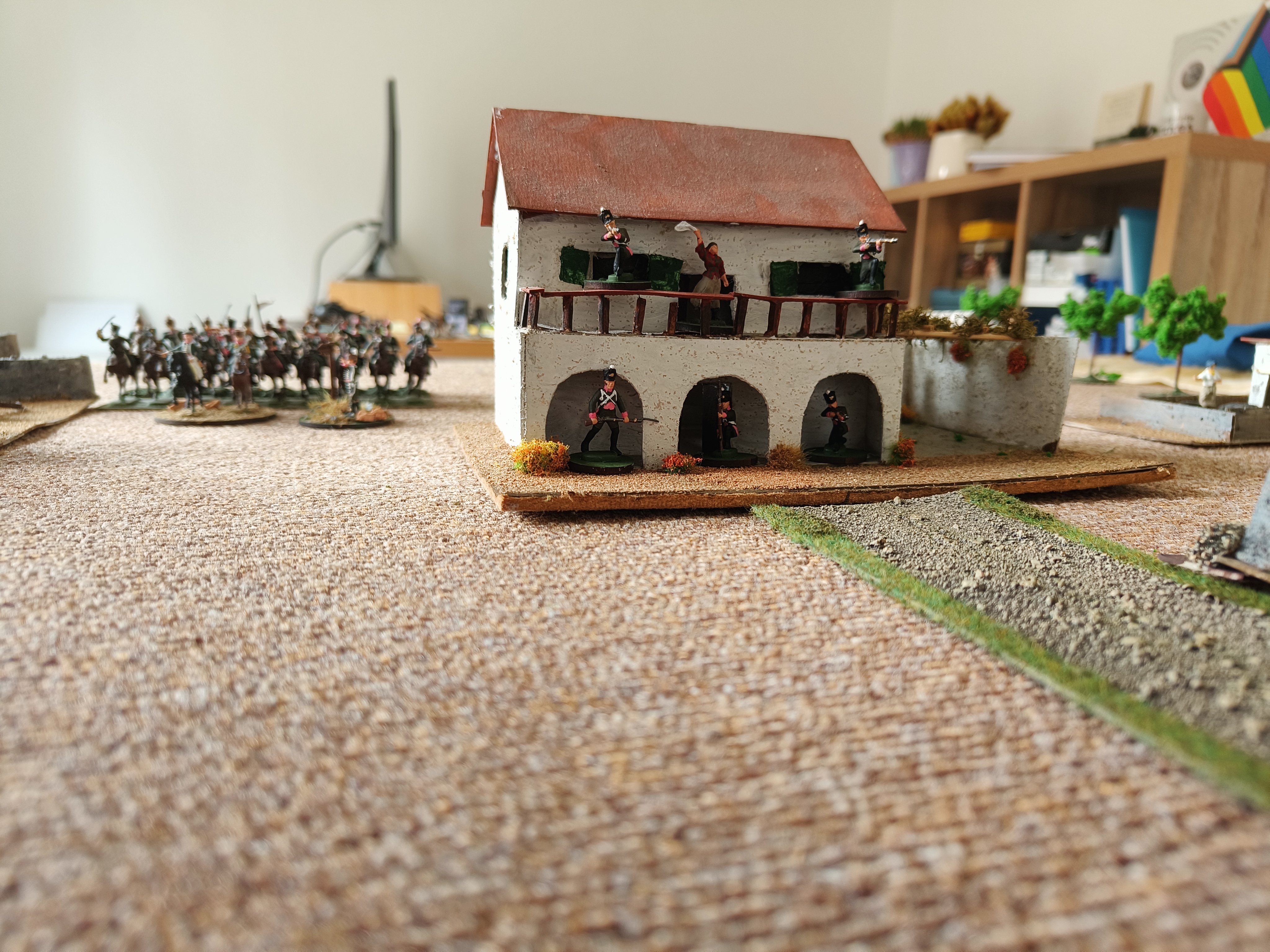
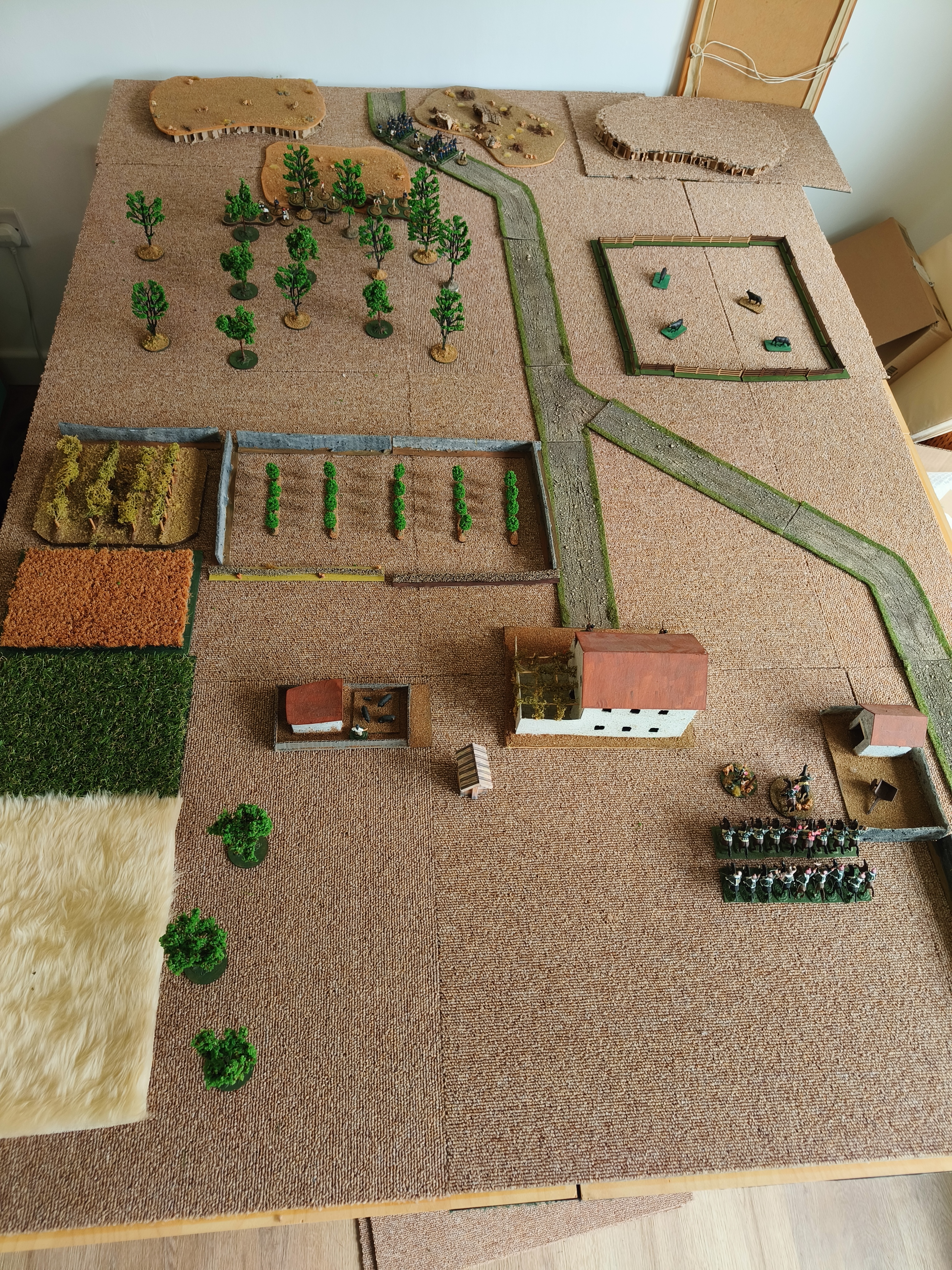
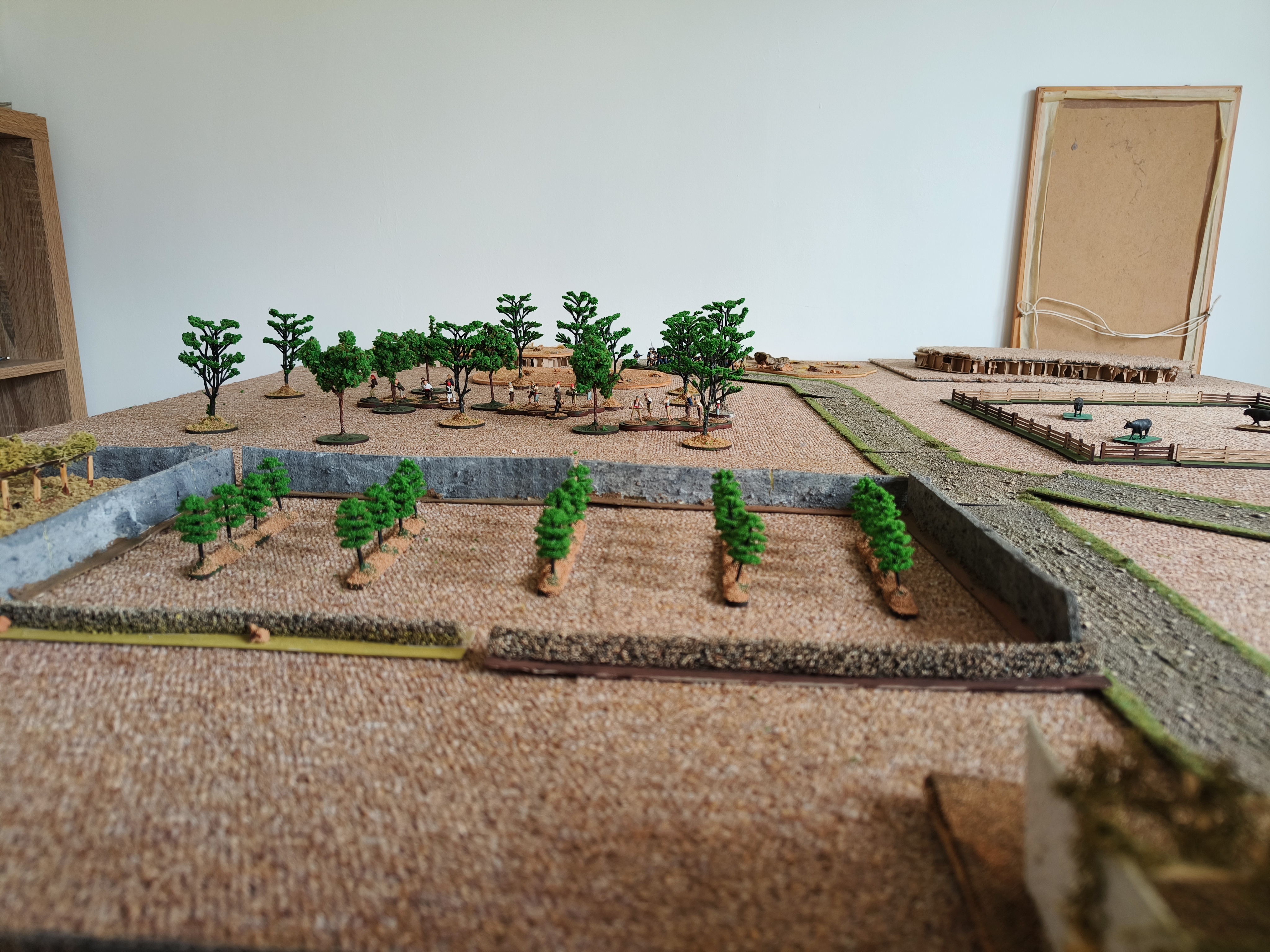
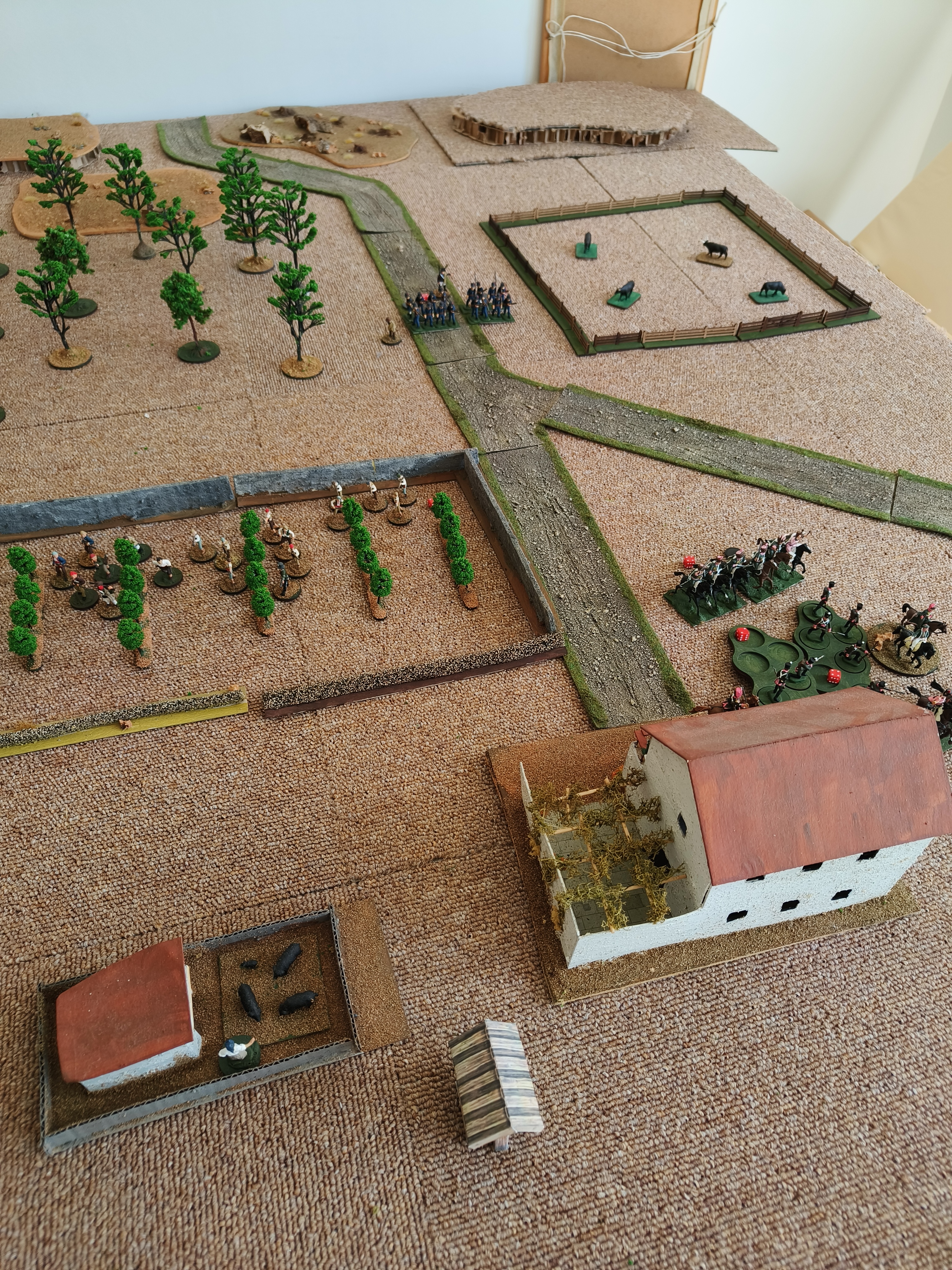
The action focuses on a farmhouse where a piquet from the 27th Chasseurs a Cheval has been spotted by Bolanos' irregular Spanish forces coming down from the hills. The French primary deployment point is in the yard of the farmhouse. The Spanish primary deployment point is in the hills beyond the farm.
Forces
French
D'Aremberg has a single squadron of his regiment present, and has to chosen to dismount a portion of his force to help him more easily defend the farmhouse.
- Duc D'Aremberg status 4 leader (1).
- Marechal des Logis Willems status 1 leader (3).
- 2 Groups of mounted chasseurs a cheval.
- Lieutenant Demets status 2 leader (2).
- 2 Groups of dismounted chasseurs a cheval.
- 45 points.
Chasseurs a Cheval are equivalent to Hussars in the army list but are armed with a carbine in addition to their sabre.
Spanish
- Jefe Bolanos status 3 leader (1)
- Enrique Hoyo status 1 leader (4)
- 3 groups of guerilla skirmishers (90 men)
- Luca Rabadan status 2 leader (2)
- Emilio Castejon status 1 leader (3)
- 2 group of guerilla militia (100 men)
- Holy man.
- 44 points
Orders
Duc D'Aremberg
We will adopt a defensive posture. Half of the squadron is to dismount and garrison the main farm building. The remaining half to remain mounted and in reserve and look for an opportunity to sweep forward and drive the Spanish from the field.
Jefe Bolanos
We will not rush forward until we have established the enemy's intention. The skirmishers will work forward through the woods to the outer wall and the decide what to do next. The militia will remain in formation on the road and move forward to protect the flank, taking any opportunity to rush forward.
Victory
This scenario is based on Scenario Five: Attack an Objective from the Sharp Practice rulebook. The Spanish can claim a victory if they succeed in capturing the French primary deployment point. If the Spanish withdraw this is a French victory.
Result
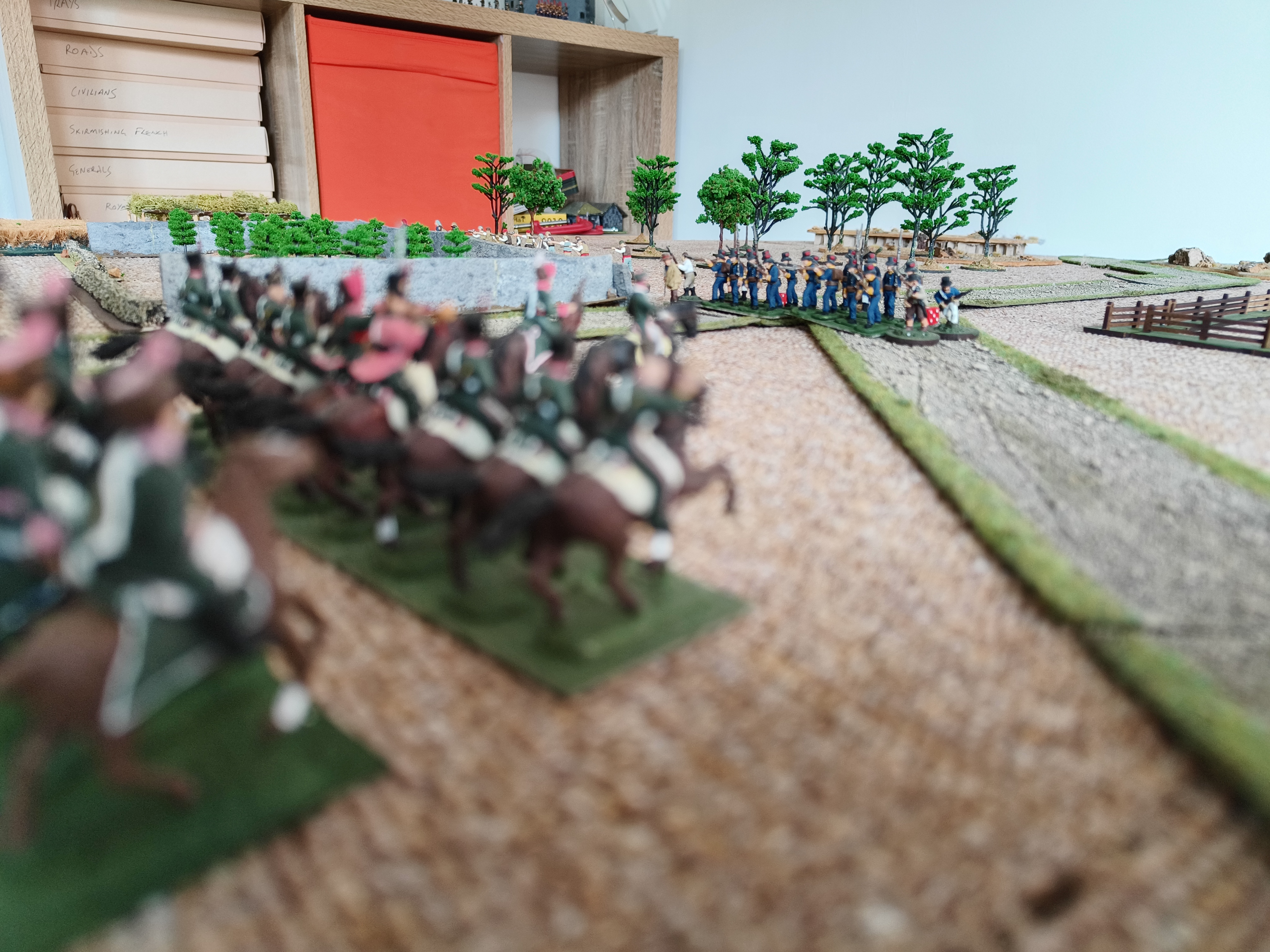
D'Aremberg dismounts half his squadron to hold the farmhouse, and keeps the remainder mounted in reserve. Bolanos' skirmishers being to advance through the woods while the militia protect their flank in formation on the road. Reaching the outskirts of the farm, the skirmishers keep up an effective fire on the farmhouse, eventually causing many of the Belgians to seek safety on the ground floor. D'Aremberg seeks to break through by rushing his cavalry against the militia, but the Spanish hold surprisingly firm, remaining in line and while falling back briefly they keep formation and pepper the cavalry with musketry.
Having suffered significant casualties, and having failed to break the militia, D'Aremberg decides to cut his losses, withdrawing from the farmhouse and limping away, leaving a number of dead and wounded behind.
Casualties
| Dead | Seriously Wounded | Walking Wounded | |
|---|---|---|---|
| French | 25 | 25 | 20 |
| Spanish | 10 | 0 | 25 |
French seriously wounded are left on the field and captured.
Images